
 Image 1 of 3
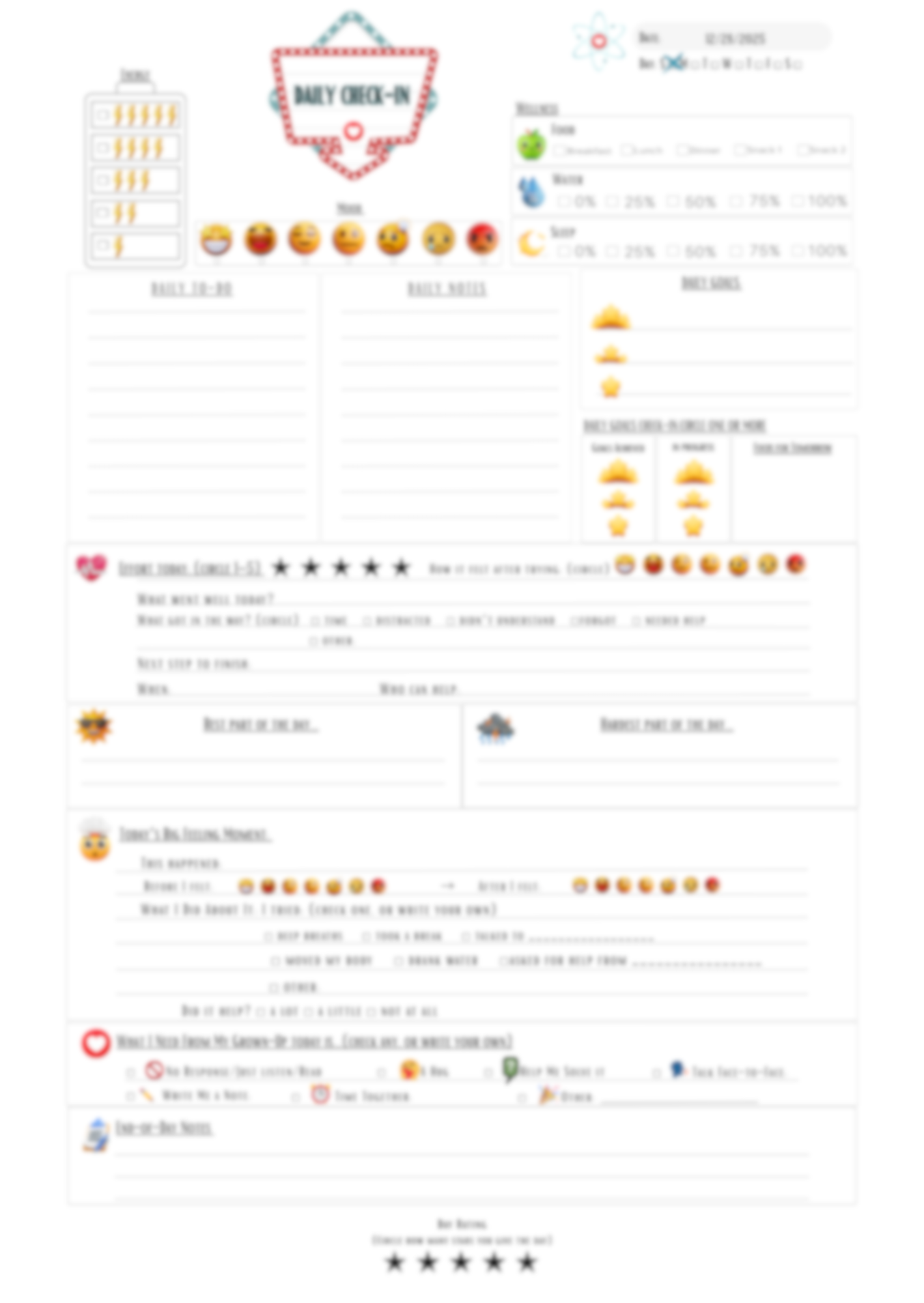 Image 2 of 3
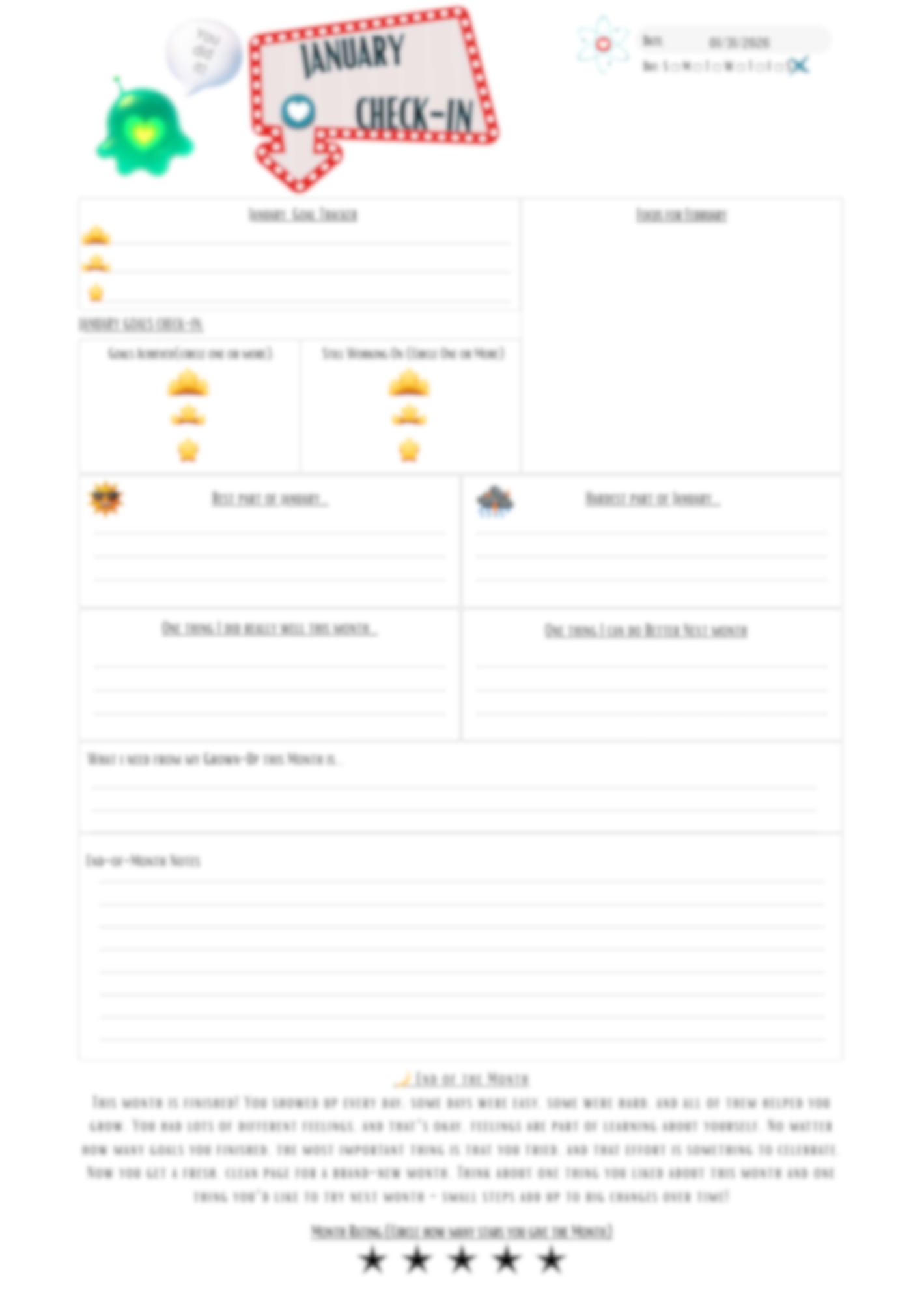 Image 3 of 3
The Nuclear Journal for ages 5–12 is a two-part system designed to help younger children express their day in a safe, age-appropriate way while giving parents a structured, measurable method for understanding patterns, routines, and emotional stability. Both components are required. The child uses their version, and the parent uses the Guide & Progress Log to interpret and track the information.
This system gives families a way to monitor emotional change, behavioral patterns, stress signals, daily habits, and environmental influence across the entire year — without placing pressure on the child or exposing them to scoring they may not be ready to interpret.
This is the child’s daily journal. It is built specifically for developing readers and younger thinkers who need structure, predictability, and simple self-expression.
Instead of numbers, the child journal uses:
Symbols and icons instead of numerical values
Short, guided prompts suitable for early literacy
Simple reflections on mood, energy, routines, and choices
Visual scales that help children identify “how they felt” without judgment
Children see only their symbols. They do not interact with or interpret the numerical scoring system. This protects them from feeling evaluated while still encouraging awareness and communication.
The child’s role is expression.
The parent’s role is interpretation.
This component is not optional and is not meant for children to use or see. It contains the full scoring scales, explanations, and interpretation framework behind The Nuclear Life system.
Parents use this to:
Translate the child’s symbol-based entries into measurable numerical scores
Track consistency, regulation, and behavior week to week
Identify early signs of disruption, stress, or emotional strain
Document environmental or lifestyle changes that influence stability
Record notes that help them understand patterns over time
View month-to-month progress in a structured, objective format
The Guide explains:
How each scale works
What each symbol corresponds to numerically
How to understand decreases or increases in the child’s stability
How to support the child based on patterns, not guesswork
The Progress Log gives parents a dedicated space to document scores, observations, and emerging themes without showing the child the numerical values.
Younger children benefit from expression without evaluation, while parents need measurable data to understand their child’s emotional and behavioral landscape.
This system allows:
the child to journal without pressure
the parent to monitor stability without guesswork
both to participate in age-appropriate roles
early identification of shifts that might otherwise go unseen
consistent communication and understanding over the year
Families gain a clear picture of routine, mood, behavior, and environmental impact — one that can help guide support at home, coordinate with educators, or discuss patterns with healthcare providers when needed.
This full-year system provides daily structure and long-term insight, giving families a predictable, repeatable method for supporting a child’s emotional awareness and stability. It aligns with the measurable framework used across The Nuclear Life and introduces early emotional literacy in a way children can understand.
The Nuclear Journal for ages 5–12 is a two-part system designed to help younger children express their day in a safe, age-appropriate way while giving parents a structured, measurable method for understanding patterns, routines, and emotional stability. Both components are required. The child uses their version, and the parent uses the Guide & Progress Log to interpret and track the information.
This system gives families a way to monitor emotional change, behavioral patterns, stress signals, daily habits, and environmental influence across the entire year — without placing pressure on the child or exposing them to scoring they may not be ready to interpret.
This is the child’s daily journal. It is built specifically for developing readers and younger thinkers who need structure, predictability, and simple self-expression.
Instead of numbers, the child journal uses:
Symbols and icons instead of numerical values
Short, guided prompts suitable for early literacy
Simple reflections on mood, energy, routines, and choices
Visual scales that help children identify “how they felt” without judgment
Children see only their symbols. They do not interact with or interpret the numerical scoring system. This protects them from feeling evaluated while still encouraging awareness and communication.
The child’s role is expression.
The parent’s role is interpretation.
This component is not optional and is not meant for children to use or see. It contains the full scoring scales, explanations, and interpretation framework behind The Nuclear Life system.
Parents use this to:
Translate the child’s symbol-based entries into measurable numerical scores
Track consistency, regulation, and behavior week to week
Identify early signs of disruption, stress, or emotional strain
Document environmental or lifestyle changes that influence stability
Record notes that help them understand patterns over time
View month-to-month progress in a structured, objective format
The Guide explains:
How each scale works
What each symbol corresponds to numerically
How to understand decreases or increases in the child’s stability
How to support the child based on patterns, not guesswork
The Progress Log gives parents a dedicated space to document scores, observations, and emerging themes without showing the child the numerical values.
Younger children benefit from expression without evaluation, while parents need measurable data to understand their child’s emotional and behavioral landscape.
This system allows:
the child to journal without pressure
the parent to monitor stability without guesswork
both to participate in age-appropriate roles
early identification of shifts that might otherwise go unseen
consistent communication and understanding over the year
Families gain a clear picture of routine, mood, behavior, and environmental impact — one that can help guide support at home, coordinate with educators, or discuss patterns with healthcare providers when needed.
This full-year system provides daily structure and long-term insight, giving families a predictable, repeatable method for supporting a child’s emotional awareness and stability. It aligns with the measurable framework used across The Nuclear Life and introduces early emotional literacy in a way children can understand.